
Researchers increasingly expect environmental data to be easy to find, explore and analyse. Data users want to spend less time downloading files and managing infrastructure, and more time answering scientific questions.
At the Centre for Environmental Data Analysis, part of the Natural Environment Research Council (NERC) Environmental Data Service, we are transforming how people access climate and Earth observation data. Much of this work is being delivered through the Earth Observation Data Hub, helping researchers use complex datasets more efficiently.
As environmental datasets continue to grow in size and complexity, we need new ways to help users discover, access and analyse information. Through new technologies, improved services and close collaboration with research communities, we are building a more flexible and user-focused approach to data access.
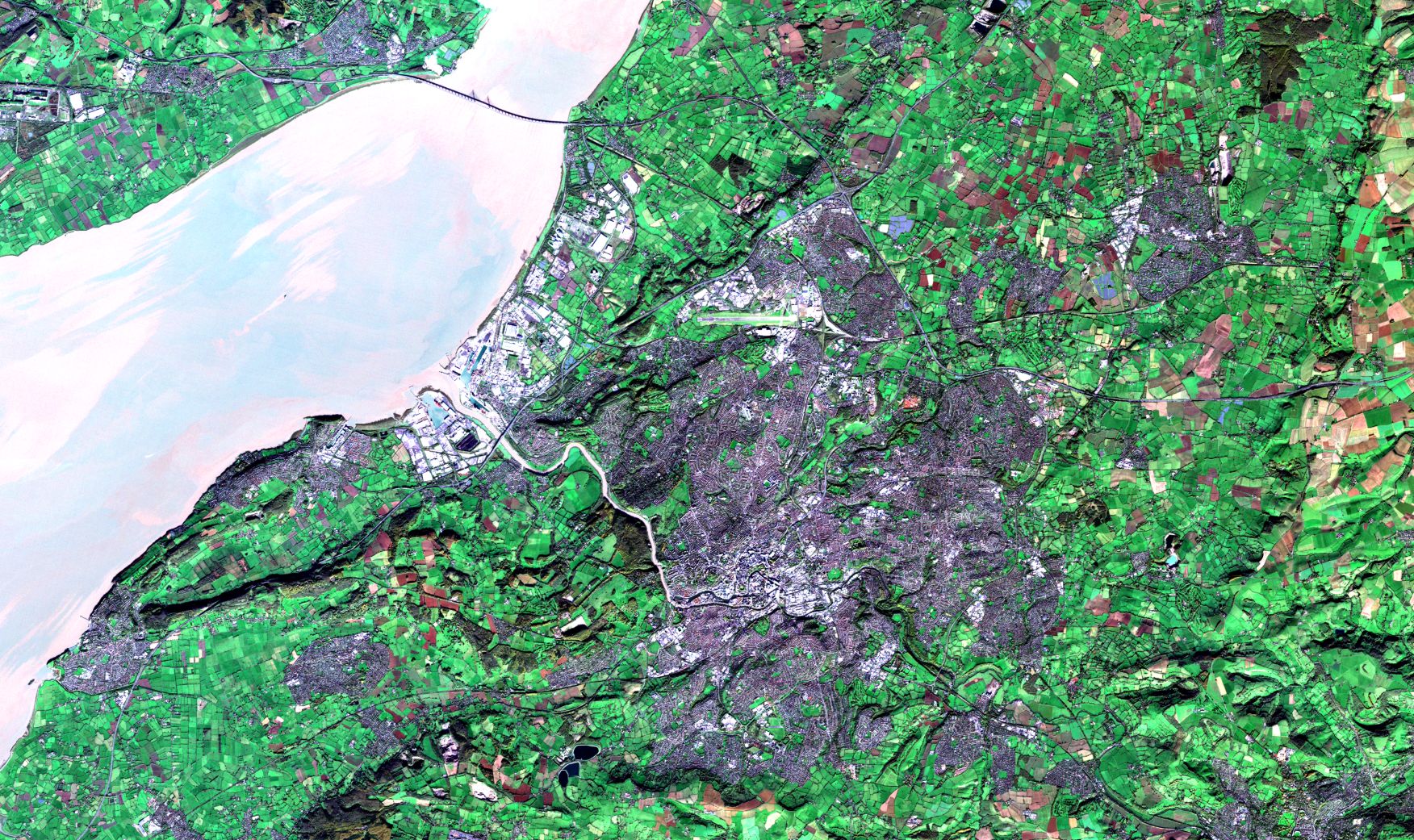
Example of high-resolution earth observation data that can be accessed via the Earth Observation data Hub.
Making environmental data easier to use
For many years, access to environmental data relied on large downloads, complex file structures and powerful local computing resources. While this approach supports many important scientific advances, it can create barriers when researchers need to work with increasingly large datasets. Cloud-optimised technologies are changing this.
Formats such as Zarr and Cloud Optimised GeoTIFFs enable efficient streaming access to data, allowing users to retrieve only the portions they need rather than downloading entire datasets. Researchers can rapidly explore specific locations, variables, or time periods while minimising data transfer, reducing costs, and accelerating analysis.
We're working closely with partners, such as the Computational Modelling Services team at the National Centre for Atmospheric Science, to encourage cloud-optimised approaches from the start of new projects. Existing programmes are already benefiting from this work, including initiatives that are beginning to adopt cloud-access methods and modern data formats.
These technologies also support browser-based tools and visualisation services that make environmental data easier to explore. This lowers technical barriers and opens data to a wider community of users. For researchers, this means less time managing data and more time focusing on scientific discovery.
The lessons learned through the Earth Observation Data Hub are helping shape services across the wider environmental data landscape.
Improving performance and usability
Alongside the adoption of cloud-native formats, we have improved the performance and usability of datasets available through the Earth Observation Data Hub. Recent work has focused on making large and complex climate datasets easier to access, analyse and visualise.
Key improvements include:
- rebuilding data aggregation files to improve performance
- reducing inefficiencies that slowed data access
- adding dataset thumbnails and enriched metadata to support faster catalogue navigation
- developing demonstration notebooks and example workflows that showcase the use of cloud-native data formats
- enhancing visualisation tools that allow users to explore datasets before downloading them
- supporting interactive access to large datasets through cloud-native services, reducing the need to move significant volumes of data
Together, these developments make the Earth Observation Data Hub more intuitive, responsive and accessible, enabling users to spend less time managing data and more time generating scientific, operational and commercial insights from Earth observation information.
Supporting real-world applications
The value of these developments extends beyond technical improvements. Researchers, policymakers and commercial organisations are using Earth observation and climate data to tackle real-world challenges.
Across its growing user community, the Earth Observation Data Hub supports real-world applications such as:
- monitoring environmental change through satellite and climate datasets
- analysing the impacts of climate change on land, oceans and ecosystems
- supporting sustainable land management and agriculture
- tracking changes in land cover, vegetation and biodiversity
- improving understanding of coastal and marine environments
- helping organisations assess environmental risks and resilience
By combining data discovery, cloud-based processing and visualisation tools within a single environment, the Earth Observation Data Hub helps users move more quickly from data access to scientific insight. This enables organisations to test new ideas, develop applications and make better use of environmental information in decision-making.
Shaped by our users
Community engagement plays an equally important role. We are working closely with researchers, data providers and software developers to understand how people use environmental data and where improvements are most needed.
The Earth Observation Data Hub is helping build connections across the Earth observation community. By bringing together researchers, industry partners and public sector organisations, the platform supports knowledge sharing, collaboration and the development of common approaches to environmental data challenges. Through hackathons, demonstrations, user interviews and open-source collaboration, we are gathering feedback that directly shapes future developments.
This user-centred approach helps ensure new services support real scientific workflows and respond to emerging community needs. It also helps to identify opportunities to improve data accessibility early in the development of new projects and services.
Looking ahead
We are helping create a future where environmental data is easier to discover, access and use. By combining cloud-native technologies with strong community engagement, we're building services that support today's research and prepare for the challenges of tomorrow.
Environmental datasets will continue to grow in scale and complexity. Our focus remains the same: to help researchers unlock new scientific insights and use environmental data more effectively to address some of the world's most pressing environmental challenges.
Note: AI was used as a support tool in developing this article alongside input and review from subject matter experts.