In March 2026, Labour MP Mike Reader introduced a Ten Minute Bill (the Geotechnical Data Bill, also known as the Ground Data for Growth Bill) proposing mandatory sharing of geotechnical information across the UK, including borehole logs and groundwater records. The National Geoscience Data Centre (NGDC) already receives and openly shares ground‑investigation data on a voluntary basis. These nationally significant datasets enable smarter decision‑making, improve safety, and support the planning of a more resilient and sustainable future.
We rarely see the ground beneath our feet, yet it underpins everything from where we build homes and transport networks to how we protect our water supplies. Geological data offers the essential evidence needed to make informed decisions about national infrastructure, economic development, and environmental resilience. However, obtaining high‑quality “ground truth” data is often difficult, intrusive, and expensive. As a result, much of the information geoscientists rely on to understand and model the composition and behaviour of the subsurface comes from data shared voluntarily by industry such as records from ground investigations, construction projects, and mining operations. These contributions play a vital role in building the scientific knowledge that helps society plan safely, sustainably, and cost‑effectively. For example, these data underpin knowledge that support:
- Infrastructure planning: Accurate information on ground conditions helps ensure e.g. roads, railways, homes, and hospitals are built safely and cost‑effectively
- Climate resilience and flood management: Subsurface data enables modelling of groundwater movement, informing policies for flood mitigation, water storage, and protection of drinking-water supplies.
- Risk reduction and land‑use planning: Geological data informs how we identify areas vulnerable to subsidence, landslides, and seismic hazards, supporting safer development choices and reducing long‑term liabilities.
- Sustainable resource management: Understanding the subsurface helps optimise the use of clean energy options (e.g. geothermal, natural hydrogen, wind), mineral resources, waste disposal and groundwater while safeguarding the environment.
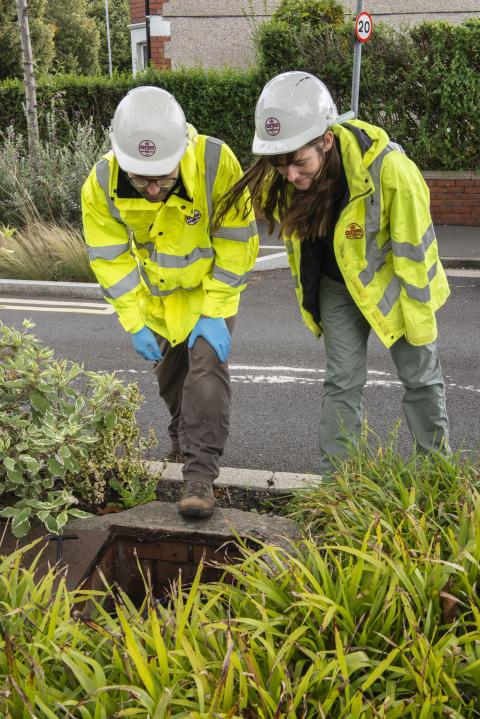
High‑quality geotechnical information plays a vital role in future societal developments. Credit: BGS.
The National Geoscience Data Centre (NGDC) receives and openly shares ground‑investigation data deposited on a voluntary basis and is mentioned in the Government’s Construction Playbook as the place of deposit for publicly funded infrastructure projects. Examples of these data include:
- Single Onshore Borehole Index - https://data-search.nerc.ac.uk/geonetwork/srv/eng/catalog.search#/metadata/9df8df52-d7c7-37a8-e044-0003ba9b0d98
- All borehole data - data-search.nerc.ac.uk/geonetwork/srv/eng/catalog.search#/metadata/9df8df51-630c-37a8-e044-0003ba9b0d98
- AGS data - data-search.nerc.ac.uk/geonetwork/srv/eng/catalog.search#/metadata/8c4c74dd-30fd-0534-e054-002128a47908
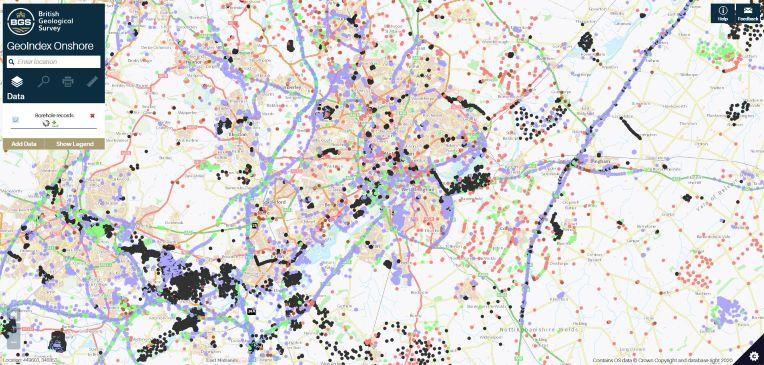
Borehole records available through the BGS Geoindex. Credit: BGS.
The National Geological Repository, which is aligned with NGDC, also provides access to physical drill-core and cuttings to support knowledge sharing about the subsurface.
These data contribute to a national public‑good asset that underpins BGS geology, 3D modelling and geological characterisation for societal benefit. For example:
- BGS geology 50k
- GeoSure Basic
- BGS GeoSure shrink Swell 3D for London and Thames Valley
- Urban 3D models such as Cardiff City regional geological model
Despite this, large quantities of ground investigation data remain fragmented, inaccessible and/or unshared. We estimate that <10% of ground investigation boreholes are submitted to the NGDC. This creates duplication of effort and limits the evidence base from which to inform decisions about the management of the subsurface.
BGS, in conjunction with NGDC staff, has recently undertaken engagement activities through the Common Ground project and the North-East England Data Drive to work with stakeholders and identify barriers to depositing data.
NGDC continues to work with clients to create operational data sharing agreements, which requires data to be deposited with the Data Centre. An agreement with Network Rail has been particularly successful, enabling regular deposits of ground investigation data in AGS format for wider utility.
Providing borehole data in AGS format to the BGS [NGDC] ensures consistent, high-quality geological records that support national research, enhance intelligence and inform more efficient infrastructure management and planning. Contributing to a comprehensive and accessible geoscience database will help future generations and projects make informed decisions. In addition to the existing data sharing agreement with the BGS, Network Rail has recently updated its Geotechnical Design standard. This now requires a copy of all factual data to be provided to the BGS in AGS format. Simon Abbott – Network Technical Head (Geotechnics) Network Rail
Legislation to improve capture of geotechnical data would unlock wider knowledge sharing, reduce duplication, and support evidence‑based policy that benefits communities and the economy helping us make smarter decisions, stay safe, and plan for a more resilient future.
To learn more about the National Geoscience Data Centre and the data it holds, visit the NGDC website.